
A food processor struggling with repeated breakdowns turned to Tempco Electric Heater Corporation. The result: a tailor-made heating solution that replaced frustration with reliability.
In the world of industrial food production, consistency is everything, and when a large food processor found itself battling repeated equipment failures in a key fryer line, the costs were measured not just in dollars but in downtime, maintenance, and missed production targets.
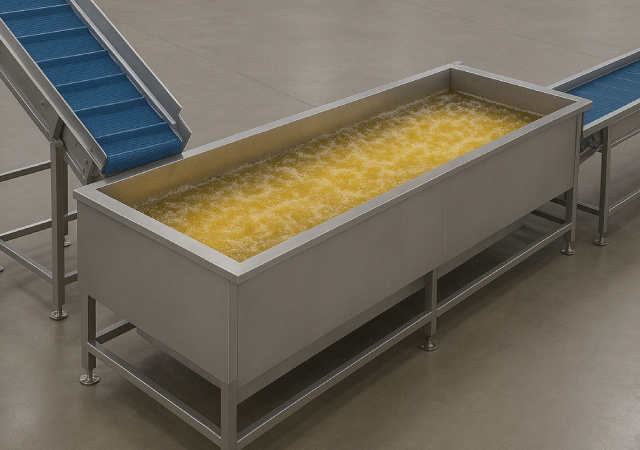
At the center of the problem was the fryer’s heating assembly, a massive, fully submerged structure measuring nearly ten feet long and two feet wide. Designed to guide product through heated oil while being removable for cleaning and maintenance, the original unit had a fatal flaw: it failed to account for the natural expansion that occurs when heating elements reach extreme temperatures.
Over time, the assembly buckled under strain, leading to uneven heating, mechanical breakdowns, and repeated service interruptions. What the processor needed was a heating system that was durable, reliable, and built to last, and for that they turned to Tempco, a manufacturer with a reputation for tackling difficult heating challenges.
Rethinking the Fundamentals
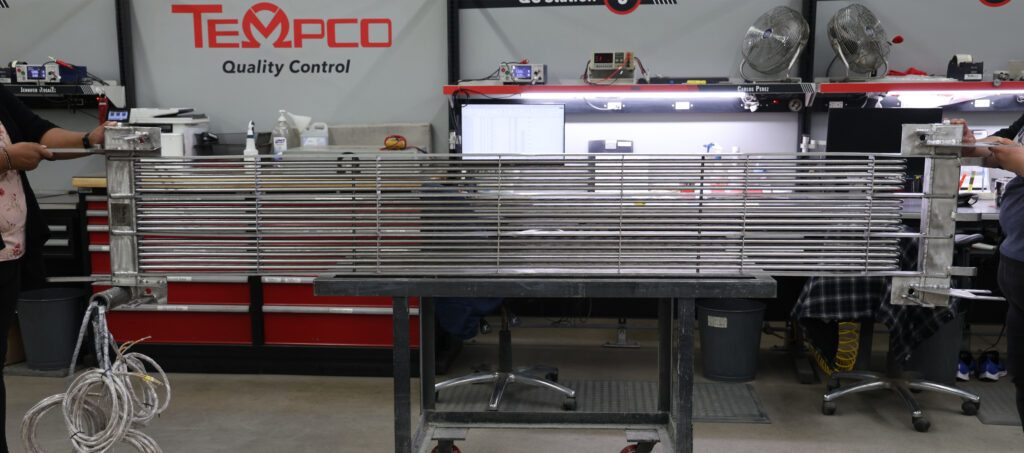
Tempco’s engineers began with the flaw that had doomed the earlier design: thermal expansion. Rather than treating it as an afterthought, they built a new solution around it, creating a heating assembly that used U-bend tubular elements spaced to allow for natural growth during heating cycles.
The adjustment, while simple in concept, was significant in practice. By anticipating expansion, the engineers eliminated the buckling problem entirely, while at the same time ensuring uniform heat distribution across the fryer so that product quality would not be compromised by hot spots or uneven cooking.
The unit was built entirely from stainless steel, chosen for both its durability and its compatibility with the fryer’s oil medium. The frame was engineered not only to support the weight of the elements but also to allow operators to lift the heater in and out of the fryer with relative ease. A sealed terminal housing, designed specifically for this project, provided protection for the electrical connections while the unit operated fully submerged.
Managing Complexity in Production

The scope of the project went well beyond a fresh design. Manufacturing such a large, welded sheet metal assembly brought a series of challenges, particularly in maintaining tight tolerances given the number of parts and welds involved.
To address this, Tempco divided the heater into smaller subassemblies before combining them into the final structure, an approach that controlled tolerance stack-up and simplified welding operations. Detailed production prints and assembly instructions guided the work, while coordination meetings between engineering and production teams ensured each step was sequenced correctly.
Fabrication was streamlined using sheet metal components designed with slots, cutouts, and etched alignment lines that helped welders place parts accurately and reduced the likelihood of error. After each stage, from laser cutting to welding and final assembly, engineers verified critical dimensions and features. The quality control department then conducted final inspections covering not only dimensions but also wattage, voltage, materials, and appearance.
Even testing required innovation. Because of the custom terminal box and 15-foot lead wires, standard testing equipment was not adequate. Tempco built a specialized pressure-testing unit to confirm the sealed housing could withstand full submersion without risk of leakage.
A Tailored Solution
Every aspect of the new assembly was custom built. Instead of modifying an existing design, Tempco recreated the customer’s original unit with substantial improvements. The frame balanced sturdiness with accessibility, while the terminal housing was carefully inspected and pressure tested to ensure long-term reliability. Sheet metal thicknesses were selected strategically, with heavier gauges assigned to components expected to bear greater weight.
The result was not just a replacement, but a purpose-built solution tailored to the fryer and its demanding operating environment.
The Role of Communication
Behind the technical achievements was a constant focus on communication. The project required collaboration across Tempco’s engineering, production, and sales teams, as well as with the customer. Designs, drawings, and models were exchanged and refined until all parties were confident in the outcome.
This iterative back-and-forth helped avoid unnecessary revisions and delays, while clarifying expectations and design intent at each stage kept the project on track.
Beyond the Factory
Once production was complete, attention turned to logistics. Moving a heater of this size safely posed its own challenges, with the long lead wires and protruding brackets especially vulnerable during transport. Tempco designed specialized packaging to secure the assembly, wrapping and cushioning sensitive areas to prevent damage.
When the unit arrived at the processor’s facility, it was installation-ready, requiring no rework, repair, or delay.
Lessons Learned
For Tempco, the project reinforced several principles that apply well beyond this single fryer. Designing for manufacturability proved critical, and by incorporating alignment features and planning subassemblies, the engineers ensured the heater was both easier to build and less prone to error.
The experience underscored the value of transforming customer frustration into confidence. What had once been an unreliable piece of equipment was replaced with a dependable, durable solution built specifically for the task.
Tempco’s work on the fryer project highlights the company’s broader capabilities. Tempco’s reputation has been built equally on a wide range of catalog products and on custom solutions for numerous applications.
For the food processor, the new heater delivered immediate benefits: less downtime, lower maintenance costs, and consistent product output. For Tempco, the project was another demonstration of the company’s ability to deliver when standard solutions are not enough.
As manufacturers across industries confront unique heating challenges, the lesson is straightforward: reliability rarely comes from off-the-shelf fixes, but instead from solutions engineered with forethought, manufactured with precision, and supported by clear communication from start to finish.